
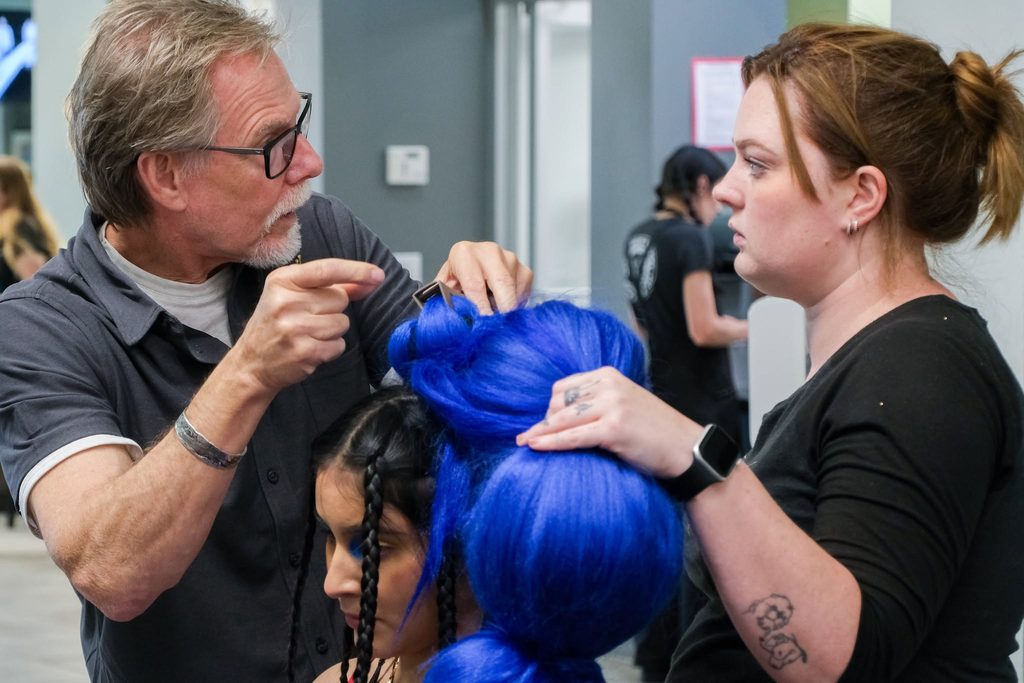
Engagement can look like a classroom management issue: who’s talking to a friend instead of listening, who’s on their phone, who’s scrolling instead of practicing. In September’s Fast Lane webinar, educators Jessica Beck and Jen Kuhn share how engagement or a lack thereof can shape school culture, student retention, and be a determination of how successful beauty professionals are once they start their own careers.
Why Engagement Matters
Engagement is everything. From key lessons in the classroom to healthy mentorships on the clinic floor, engagement is what can make or break a school’s success. Let’s face it: the more engaged students are, the more excited educators will be. Creating an environment where people are excited to learn is a great way to prevent burnout (mentioned last month here), while also being a key factor in fighting educator turnover and securing high retention rates.
When a student is checked out, they’re likely to miss key learning objectives. When those learning objectives are building blocks to prepare you for lessons on the clinic floor, this leads to confused students, educators being stretched too thin, and a school culture that’s on the rocks at best. Let’s talk about some ways your school can tackle engagement head on.
Staying Flexible
Students in this industry can spend multiple weeks and a number of hours per week in the classroom before they see a single client. Think about the last full-day training you attended. How long do you wait, if at all, to check your phone?
Ensuring engagement is engrained in your school’s culture starts with small, incremental changes. Here’s a few:
Break up the Lecture. Long powerpoints with lots of text can leave students zoning out. Try utilizing partners across the room to get students up and moving. It may even help them retain what they’ve learned.
Get Creative. Jen shares one student’s story of prepping for a skin test and remembering the skin layers because her educator had the class build “skin in a cup,” with each layer representing something different. Another educator still remembers orbicularius oculi “eye eye” more than 20 years later because of the vocal cue her teacher used.
Different learners need different approaches. While a workbook may be great for one student, it could be mind numbing for another. Don’t be afraid to try out different learning techniques.
Storytelling as a tool. When educators share their own experiences it opens the floor for students to do the same. Sharing how you’ve succeeded and failed sets the tone for the classroom like Beck said, school is an experiment where we’re not looking for perfection.
Peer to peer coaching. Meeting students where they’re at can be as simple as asking the distracted, chatty students in the back to pass out materials. Feeling included can be the difference between active engagement and doomscrolling.
The Perk of Knowing Your Students
It’s time to reimagine what engagement looks like. The first step to that is simple: know your students. We’re living in unprecedented times of doomscrolling and secondary education systems that don’t prepare students with the financial literacy skills they need to succeed in life. That would stress any of us out.
Hosts’ Kuhn and Beck shared one example of seeing a student with their head down during class and assumed they weren’t paying attention. When this student was asked about the lesson though, they were able to answer everything. Putting his head down helped keep him from being overstimulated thus he was able to retain the lesson better.
Engagement looks different depending on who you’re teaching. Class sizes vary and getting to know how each and every student ticks can be difficult but pay attention to how students interact with you, how they work next to their neighbors, and how they respond when you check in. It will absolutely make a difference.
On the Clinic Floor: Make It Collaborative
Classroom engagement means casting a wide net. On the clinic floor, engagement is often one on one so knowing the student matters even more. How do they like to receive feedback? What signals tell you that this student is uncomfortable, and what signals tell you when you need to take a step back because they got it handled?
Beck’s advice was to build a culture of collaboration rather than “sage on the stage” instruction. Often on the clinic floor, educators are telling students which angle to hold their fingers at or which color to choose, Beck encourages you to ask questions that help them discover the answer. Giving students that autonomy builds confidence and helps them retain what they learn.
Kuhn shares how easy it is to slip into autopilot when the floor is busy; pointing out toners as an example. Students consistently said they wanted to learn them, but the pace of the floor made it tempting to just do it for them. That’s a learning opportunity lost. Utilizing tips from our last blog post-avoiding Burnout in the Classroom can help ensure educators are staying present with students while maintaining the energy to pivot when a learning opportunity arises.
Getting Students off Those Dang Phones
Phone Usage. This one might be controversial but Kuhn shares a unique approach to the overuse of phones in the classroom. Unlike many school districts who are prohibiting phone usage, Kuhn encourages intertwining their use into lessons. Students are adults, and much like many of us adults, learning when phone use is appropriate is part of preparing for work postgrad. Our educators approach has three parts:
- Set clear boundaries about when phone usage is and is not prohibited.
- Be consistent with a warning first and then ask them to leave the classroom.
- Assign a “make a TikTok about today’s new products” assignment or a peer interview so when they are using their phones, it’s still centered around learning.
Personality conflicts. Not every student will connect with every educator and vice versa. Part of preparing a student for their career postgrad is ensuring students learn how to work with everyone, so the responsibility is on the educator to find middle ground.
Students who love to chat. Set expectations about when chatting is appropriate and try to incorporate time for them to work together, remind them consistently, and use assigned seating if needed.
For our shy or more reserved students. It’s imperative you don’t let them opt out entirely, because those are real career skills. Try to start slow by pairing them with a student they trust or having them present to just one person.
Slow clinic-floor days. One of the hardest challenges by far. We see this problem too often; students who have hit their requirements and may be struggling with a bit of senioritis can check out fast. Here’s what we suggest:
- Blind-pair demos when several students are free.
- Conversations about what each student wants from their time, such as asking a student nearing graduation if her business cards are ready.
- Fun competitions, with prizes like a jeans day pass (if your school also has a dress code)
- Utilizing phones in a productive way, like finding a video on a technique they want to practice more.
Try this: Treating Questions Like Currency
Setting the tone for your classroom can be as easy as setting up a reward system for students who ask great questions. Rewarding students for asking questions that show curiosity (“Why did you choose that technique for this guest?”), not filler like “How old are you?” shows you prioritize engagement in your lessons. This could be a weekly question goal that leads to a small monthly or quarterly perk. The goal is always to get students to think more deeply about the work they’re doing.
Three Simple Ways to Boost Engagement Starting Today
- Get to know your students. What works for one class may fall flat with the next. Walk around, pay attention, and watch how they engage.
- Review your lesson plans ahead of time. Even if you’ve taught it 100 times, take five minutes to ask whether you’d want to sit through it, and add something fun.
- Ask your students. Their feedback may point to something you wouldn’t have tried, and as the educators put it, if it works, who cares? Let’s do it.
But, why?
Context is everything. Especially these days. Students have a small computer in their pockets and are fed large amounts of information via algorithms, daily, if not hourly. Sharing real life examples with your students reinforces the lessons and the necessary real-world application. Kuhn says the why is one of the easiest engagement tools available. She also suggests utilizing the Prosper U’s Opportunity Cards as a tool for this, letting students choose their own goals for a new topic and check in on them. Email “Opportunity Cards” to info@myprosperu.com to get yours.
Final Thought
Engaging students may take a little more foresight and planning but when the pay off is stronger retention and a school culture where everyone feels safe to learn, make mistakes, and grow together, it’s all worth it. This month, try utilizing one of our suggestions to engage your classroom of future beauty professionals. Stay tuned for next month’s Fast Lane on mentor/mentee relationships.
Are you part of the Prosper U community? Fast Lane Webinar’s On Demand can qualify you for CEU hours. Contact us at info@myprosperu.com for more information.
