If your job is starting to make you feel like a glorified hall monitor, it might be time to remember the not-so-secret weapon that is mentorships. Educating requires so much more than just conversations up and down the clinic floor, enforcing dress code, providing information in the classroom and leaving at the end of the day. Educators Jessica Beck and Jennifer Kuhn are back in October’s Fast Lane Webinar with unfiltered conversation around the critical role educators play in mentorship through the 6 C’s of Mentorship: connection, communication, collaboration, circulation, cultivation, and celebration. Read ‘til the end to check out the bonus C, customization.
Connection can take 15 seconds. It doesn’t need a coffee date.
Communication at a school means knowing how to approach each student: when to push, when to soften, and who wants blunt feedback.
Collaboration has two parts: team-based mentoring, where educators share what they’re working on with each student, and peer-to-peer help.
Circulation brings in outside voices: demos, career days with speed interviews, salon tours, and graduates as mentors.
Cultivation means educators learn from students. Kuhn says student input changed her curriculum and policies.
Celebration means marking progress, not just finishing. Rewards don’t have to be big or monetary.
Bonus “C” revealed at the end.
- Connection
Educators won’t love every student and vice versa but finding a way to connect is key to ensuring each student gets the support they need. Try setting a goal to make a couple good connections each month. Catch the student on a break between classes. Think, “How can I let them know that I see them? That I genuinely care?” This makes your student feel important and ultimately builds the confidence needed to succeed.
- Communication
Whether the connection is over schoolwork or a shared hobby, the philosophy is the same: the better you know your student now, the more you know where they’re at and how to get them where they want to go. Education requires feedback. Here are some tips on how to ensure you’re doing it well in your day-to-day:
The Ask. Approaching your student and asking if they’re open to feedback is a surefire way to start the interaction off on a good foot. Eric Fisher of Eric Fisher Academy loves this approach as you never know what kind of day someone is having. Students who may be excited to hear constructive criticism one day, could be struggling with something at home the next and unable to be as open.
Push or Pull. Some days are simply not meant for feedback. Knowing how your students are doing, when they’re having a rough day vs when they’re thriving is key to knowing if it’s time to push that student or pull back and try again tomorrow.
How You Hear It. Everyone hears feedback differently. Feedback methods like the “oreo” or “sandwich” effect layer a critique between two compliments in order to maintain a student’s confidence. Meanwhile, for the more no-nonsense students, this approach may have too much fluff and students may require a more direct approach.
- Collaboration
Whether you’re a student, an educator, or an industry leader: collaboration and mentorship are vital to succeeding in the beauty industry. Educators, remember, it’s not us against them! Here are two types of collabs your school needs to remember:
Approach it together
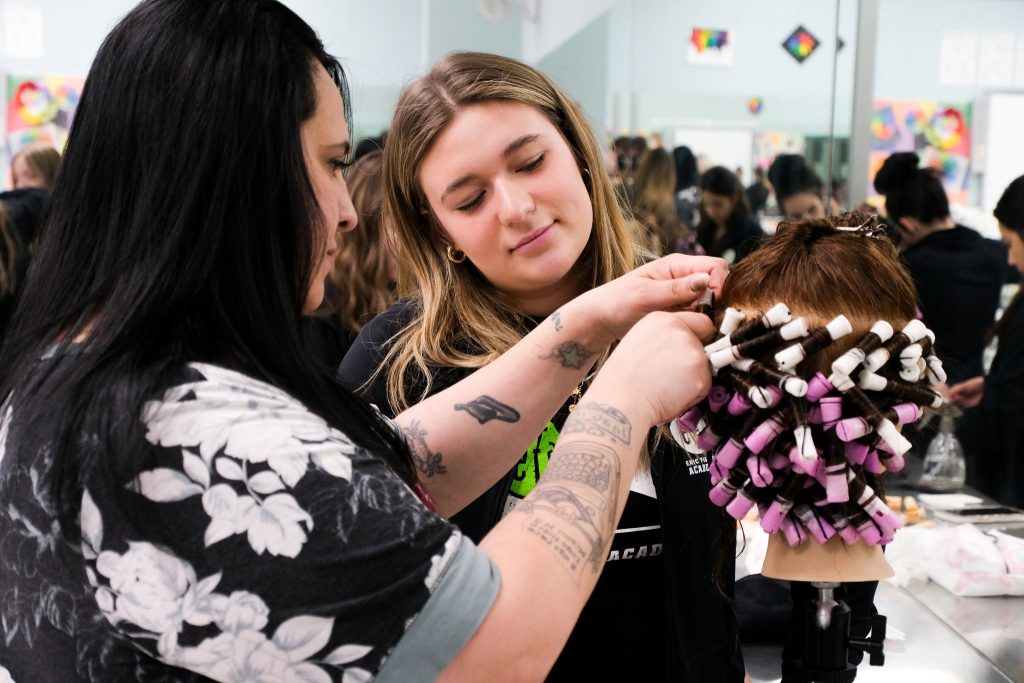
A school setting does not mean 1:1. Every educator has their own unique relationship with each student. Kuhn, lead educator at Eric Fisher Academy shares how your unique relationship and subsequent teaching approach could bridge the gap in your student’s learning. One of her students being a huge TikTok fan kept asking if she could try a “tiktok foil” seen on the app. Instead of giving a hall monitor-esque no, Kuhn asked the student, “why use this technique and why does it work for this guest?” then let the student try it. Staying involved in the process and flexible in how the student learned the lesson is how you keep learners engaged.
Peer to Peer
Making a mistake in front of an educator is nothing to one student but everything to another. Allowing peer to peer feedback opens the door to students who are still learning it’s okay to make mistakes. Educators can prep all day but sometimes the lesson doesn’t need refining, it just needs a different narrator. Beck shares a story of how one of her students was struggling with braiding. The student didn’t need Beck to explain it again. She simply needed another student to come in and explain it differently.
- Circulation
When the student’s ready, the teacher will appear. Circulate is about keeping the voices students learn from fresh. Here are three ideas on how to incorporate circulation at your school:
Career Day. Think of the local salons and professionals who are killing it and consider inviting them to a Career Day at your school. You never know what kind of doors it could open for your students and staff.
Guest Stylist. Educators know how tough it is to hear students say, “oh wow I’ve never heard that before” about a technique you know you’ve shown those students a number of times. Bringing in a guest stylist allows for skills to be learned from a fresh voice and could lead to future shadowing opportunities.
Salon Tours. Ensuring your school has a solid relationship with area salons only opens doors for your students. Kuhn, being the lead educator at Eric Fisher Academy, speaks on how lucky they are to have such a strong relationship with local salon Curls Gone Wild as they’ve provided student support via answering questions, opening doors and even providing shadowing opportunities.
Important note: mentors can provide support with more than just technical skill. Kuhn shares the example of a student with low confidence and how pairing them up with a confident professional could be key to their growth. Remember, sometimes it doesn’t work. Everyone needs their own approach so don’t be afraid to plant seeds and see how things take off from there.
- Cultivation
Educators can learn from students, too! Cultivating a school environment where students feel safe asking questions and receiving feedback starts with educators staying curious, asking questions and being open to feedback themselves. Before you get swept up in the daily to do’s, remember to slow down, ask questions, and stay present with your students. Your school culture sets the tone for how smoothly students and staff can survive or thrive.
- Celebration
We’ve said it before and we’ll say it again: The better you know your students, the better you can support them. Remember these two tips when celebrating:
Milestones Matter. Celebration isn’t only for the end goal, it’s for noticing the effort and milestones met along the way. Instead of focusing on where your students want to end up, try asking them what they hope to achieve by the end of the week. Kuhn shares an example of if your student is at a 90 minute foil time and gets it down to 50 minutes, that is something worth celebrating. She also admits those numbers are a bit extreme but the point remains: celebrate the progress just as much as the milestone itself.
Loud or Low. Some students thrive off a public shout out while others would simply love a high five. Knowing how to celebrate a student’s wins the way they want is another key to ensuring the feedback sticks.
- The Bonus C: Customization
Don’t be afraid to customize your approach. Kuhn shares how she regularly changes curriculum and policies based on student feedback. You don’t know what’s working unless you ask. Get to know your students and you will find what works but keeping a cookie cutter approach to individual learners is not how you support them. In a previous Fast Lane webinar about Burnout we discussed how knowing your capacity and planning for it allows you space to pivot throughout your work day. This is a building block to being able to customize your approach later.
Beyond the 6 C’s
Speaking of capacity, you can’t pour from an empty cup! As educators, you want the absolute best for your students. Beck explains how when she started mentoring, she felt an immense pressure to show up 100% for every student but eventually learned there has to be some give and take in that. Lean on your fellow educators and support staff and know that it doesn’t have to all fall on you.
Struggling to find time to connect? Kuhn shares how Eric Fisher Academy approached this issue by scheduling time out every Friday to have small groups get together and dive into an educational topic fitted to that specific student’s set of needs. Friday group sessions later became one-on-one end-of-day check-ins when schedules changed. Remember, you can always pivot.
Kuhn recalls early days of teaching where she describes “spilling” any and every piece of advice she could. A mentor to many over her 20 year career, one tip that sticks out to her came from a class through Pivot Point where they encouraged educators to simply be present with students. If a student approaches you during a busy time don’t do the typical, “let’s walk and talk.” Instead, stay present with that student. Let them know WHEN you can be present with them then keep your word and follow up on that promise. Put your phone away and mute the email pings during student conversations. They deserve that.
Final Thoughts
Connections don’t necessarily take 30 minutes. Even 30 seconds could make a difference in a student’s life. What’s one way you can connect with your students this week?
Are you part of the Prosper U community? Fast Lane Webinars On Demand can qualify you for CEU hours. Contact us at info@myprosperu.com for more information.
